Call Us: 386-451-7222

How to Rehearse a Presentation So You’re Ready to Deliver It
Practice the presentation you actually need to give, review a recording, and work on one specific improvement before your next full rehearsal.

You’ve read through the slides. You know what you want to say. You can picture yourself giving the presentation.
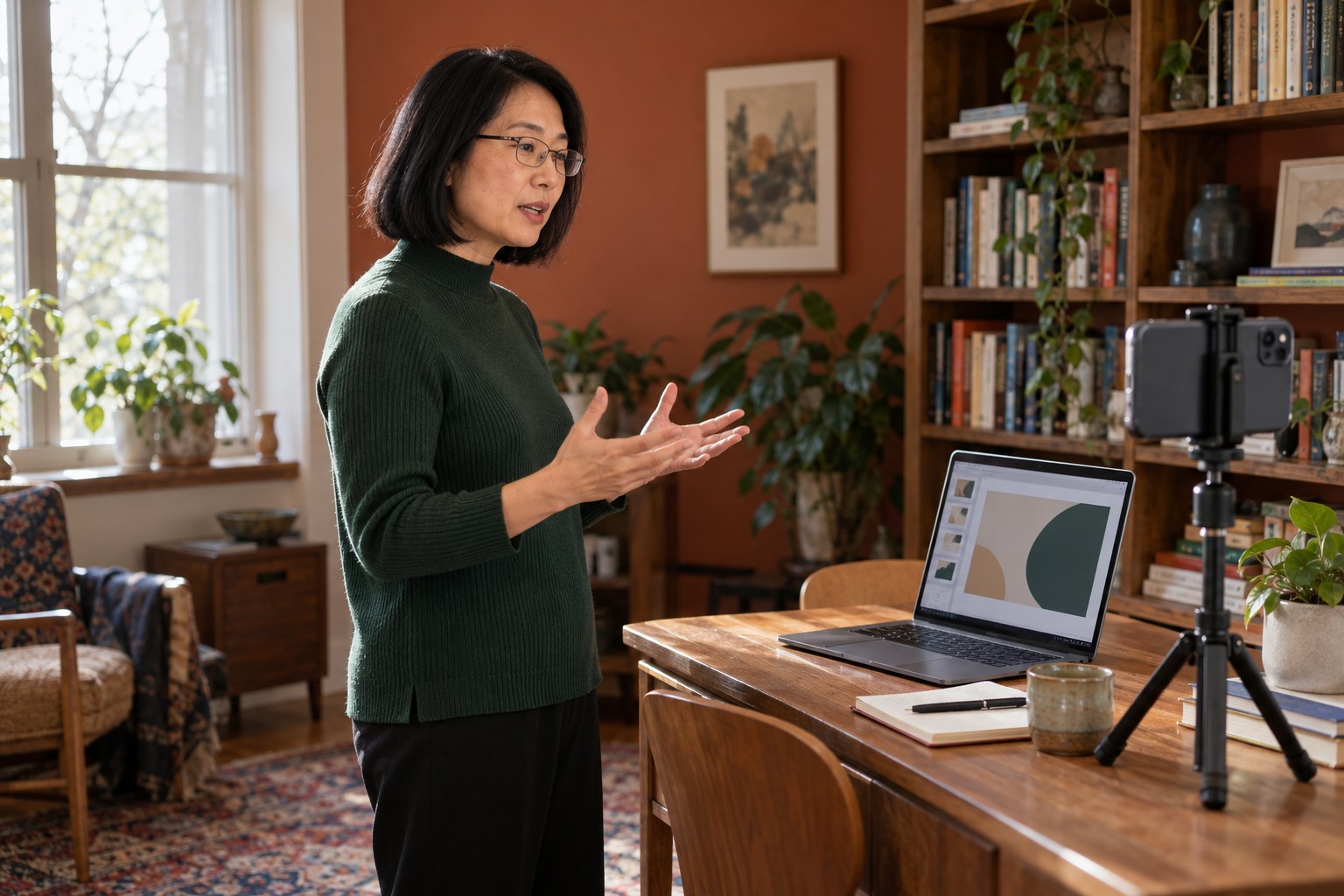
Now close the document and say the opening out loud.
Did it come out the way you expected?
That is why rehearsal matters. Reading your material helps you learn it. Speaking it aloud shows you where you lose your place, rush an explanation, or use a sentence that is hard to say.
In When You Have the Floor, I explain how to record your practice, rehearse the whole presentation, and prepare for interruptions. Here’s how to do that before your next presentation.
Begin with the presentation you actually have to give
Choose a real meeting, client presentation, training session, or speaking assignment. Write down who will be listening, how much time you have, and what you want people to understand or do afterward.
Suppose you want a team to approve a new schedule. Rehearse explaining why the schedule needs to change, how the new one would work, and what you’re asking the team to approve. Practice answering the questions they are likely to ask.
Use the notes, slides, and equipment you expect to have. Stand if you’ll be standing. Sit if you’ll be presenting from a chair. For an online presentation, use your camera and microphone.
Practice with the same setup you’ll use when you give the presentation.
Record a complete attempt
Set up your phone or computer so you can see and hear yourself. Then deliver the presentation from beginning to end with a timer running.
If you forget a word or stumble over a sentence, pause and continue with the next thought. Practice continuing after a mistake without starting the whole presentation again.
Correct a fact if you say it incorrectly. For a small verbal slip, pause and continue. You don’t need to explain every mistake.
Watch the recording after you finish. I recommend video rather than practicing in a mirror. A recording lets you give your attention to speaking first and review yourself afterward.
Check whether your explanation is clear
On the first viewing, listen as though you’re hearing the presentation for the first time.
Did you state the main point clearly? Did you explain any terms the audience might not know? Did you say what you want people to do? Notice any section you had to replay to understand.
Watch again and choose one thing to work on. You might notice that you rush through the explanation or keep turning toward the screen while you talk.
Write down what you saw or heard. “My delivery was terrible” gives you nothing to practice. “I looked at the screen while making the recommendation” tells you what to change.
Notice what worked, too. Keep the clear example, the steady opening, or the explanation that made a complicated point easy to understand.
Practice one change before the next full run
You don’t have to repeat the whole presentation every time you find a problem.
If the opening takes too long, practice a shorter opening. If you stumble between two sections, rehearse those transition sentences. If the final request sounds uncertain, say it aloud until you can deliver it clearly and naturally.
Choose one change at a time. Trying to fix your pace, hands, posture, slides, and wording in the same attempt gives you too much to think about while speaking.
Then give the whole presentation again, including the section you changed. Check that you can move from one section to the next without losing your place.
Rehearse something that could go wrong
Ask a practice partner to interrupt with a reasonable question. Try continuing without the slides. Practice a shorter version in case your time is reduced.
Choose one part of your presentation and explain it in five minutes. Then practice explaining the same point in three minutes, 90 seconds, and 30 seconds. Decide which details to leave out while keeping the main point clear. For your full rehearsal, return to the time you’ve been given for the actual presentation.
That way, if someone cuts your speaking time, you’ve already practiced a shorter explanation.
Finish with a complete rehearsal
After working on individual sections, give the whole presentation again. Include the opening, transitions, visuals, likely questions, and final request.
Check the running time. If you’re over, remove material or shorten an explanation. Speaking faster can make the presentation harder to follow.
Before your next presentation, record one complete attempt, choose one specific improvement, and record it again. Compare the two. What became clearer? What still needs practice?
For help deciding what to work on, a presentation review can give you specific feedback on your message and delivery.
Related article: How to Prepare for a High-Stakes Executive Presentation.